Baby Funny Born to Sparkle
A Design That Smiles Before the Needle Moves
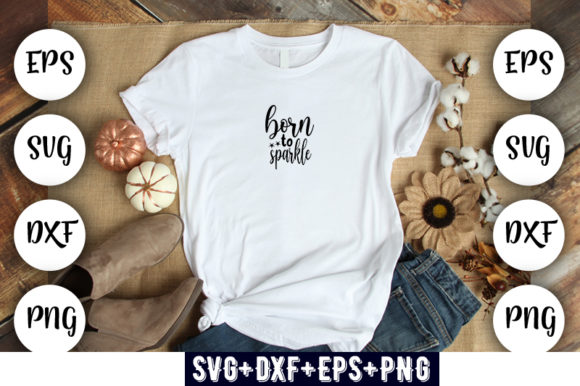
First glance at Baby Funny Born to Sparkle—and yes, it lands with warmth. Not cloying, not over-sweet: it’s a gentle wink of personality. The phrase “born to sparkle” sits cleanly in a soft, rounded sans-serif, with subtle star accents dotting the ‘o’ and ‘i’. No heavy outlines, no aggressive gradients—just clean, friendly lettering that reads instantly, even at 3 inches wide. As a machine embroidery design, it leans into simplicity without sacrificing charm. It feels made for baby onesies, but also works beautifully on linen tea towels, cotton aprons, or unstructured tote bags meant for new moms who appreciate wit over whimsy.
Where It Shines (and Where It Needs a Little Help)
I tested Baby Funny Born to Sparkle as the centerpiece on a custom-ordered organic cotton sweatshirt for a local boutique’s nursery collection. The result? Customers paused mid-browse. One mom laughed out loud, then asked if it came in “big sister” size. That reaction tells me something important: this isn’t just legible—it’s emotionally resonant. Its strength lies in its restraint. Unlike busier baby embroidery designs, it leaves breathing room for fabric texture and stitch quality to speak.
It performs reliably across several real-world applications:
- Embroidered patch: Clean edges hold up well when heat-applied to denim jackets or backpacks.
- Tote bag design: Scales smoothly from 4" to 6" without losing crispness—ideal for canvas or medium-weight cotton.
- Baby embroidery: Works on knit onesies when paired with lightweight cutaway stabilizer and reduced top tension.
- Holiday embroidery: Paired with silver thread on ivory fleece blankets, it reads as thoughtful—not trendy.
- Commercial embroidery: Fits comfortably in a 4x4 hoop, making it efficient for batch production on caps or pillow covers.
Fabrics & Surfaces: Know When to Lean In—or Step Back
This is where experience matters. Baby Funny Born to Sparkle thrives on stable, low-stretch fabrics: piqué polo shirts, twill aprons, structured cotton totes. On thin jersey or ribbed knits? It’ll need extra stabilization—and consider simplifying the star details manually if your digitizing software allows. The letterforms are generous, but the tiny stars near the vowels sit close to the edge of what fine thread can resolve cleanly on curved surfaces like baseball caps. I’d skip it there unless you’re using a high-density satin stitch and testing on scrap first.
Dark fabric? Absolutely—just confirm your thread colors have enough contrast. A light gray or pearl white thread pops nicely against navy or charcoal, especially with a slight sheen. For light fabric, avoid pale yellow or off-white threads unless you want a whisper-soft effect. And if you're planning frequent washing (think baby clothes or kitchen towels), test stitch density: too dense, and the fill stitch can stiffen the area; too sparse, and the stars risk looking pixelated. A balanced fill stitch with minimal underlay usually strikes the right balance.
What This Design Says About Your Brand—Before a Single Stitch
When your Etsy seller page features Baby Funny Born to Sparkle on a mockup of a hand-stitched burp cloth, customers don’t just see a phrase—they register tone, care, and intention. It signals that you understand new parenthood isn’t all pastel clouds and lullabies. There’s humor here. Authenticity. That builds trust faster than any “handmade with love” tagline.
For small shop owners, it’s versatile branding glue: use it on packaging tags, embroidered gift cards, or even as a subtle repeat motif on fabric labels. As a digital embroidery file, it holds up in printable mockups—especially when shown on both light and dark backgrounds. That dual-readiness makes it easier to create cohesive product listings without juggling multiple variants.
Designer Notes You’ll Actually Use
Before stitching your first Baby Funny Born to Sparkle piece, do these five things:
- Test on scrap fabric—same weight and stretch as your final garment. Watch how the stars anchor and whether the ‘r’ or ‘l’ legs waver.
- Check thread color contrast in natural light *and* under warm store lighting. What looks bold online may mute on textured fabric.
- Review stitch density in your embroidery software. If the stars feel overly dense next to the letters, reduce fill density by 5–10%.
- Confirm hoop size compatibility. While it fits a standard 4x4, double-check your machine’s actual usable area—some hoops lose ⅛" at the edge.
- Inspect small details at 200% zoom. Are the star points sharp? Does the ‘o’ close cleanly? If not, a quick manual tweak saves rehooping later.
Also: remember this is delivered as SVG, DXF, EPS, and PNG—so it’s primarily a graphics file, not a native embroidery file. You’ll need to digitize it properly for machine embroidery use. If you’re selling finished products, verify licensing terms directly with the source. And if you're offering it as part of a craft business bundle, pair it with coordinating stitch-friendly motifs (like simple clouds or single-thread swirls) to extend its usefulness.
Final Thought: Charm With Craftsmanship
Baby Funny Born to Sparkle isn’t flashy—but it doesn’t need to be. In a market saturated with overdesigned baby embroidery, it stands out by honoring space, clarity, and quiet joy. It’s the kind of T-Shirt Designs asset that earns repeat orders because it feels personal without being precious. Whether stitched on a holiday gift for a friend or scaled up for a boutique’s summer collection, it carries weight—not from complexity, but from intention. That’s the mark of a design that doesn’t just look good on screen, but lives well in the real world.