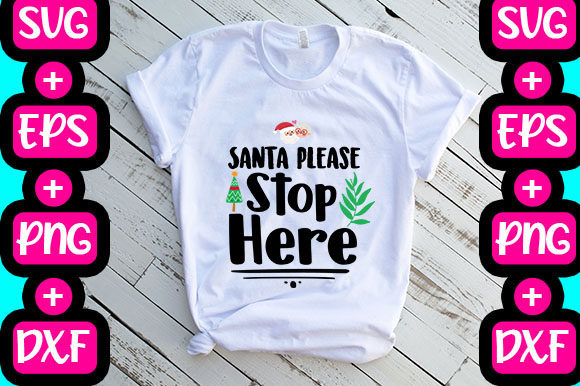
Christmas Santa Please Stop Here
As someone who’s stitched holiday designs on everything from newborn onesies to boutique aprons—and shipped thousands of embroidered gifts for Etsy sellers—I opened Christmas Santa Please Stop Here expecting charm, but not quite the quiet confidence it delivers. It’s not flashy. It doesn’t shout. But it *settles*—like a well-worn stocking hung by the fireplace: warm, intentional, and unmistakably handmade.
A Design That Feels Like a Handwritten Note
First impression? This isn’t a cartoon Santa shouting “HO HO HO!” It’s a gentle, slightly whimsical figure mid-stride, arm raised in friendly invitation, with “PLEASE STOP HERE” arched neatly above him like a soft snowdrift. The lettering is rounded but legible—not too thin, not too bold—and the Santa has just enough detail (a twinkle in the eye, subtle folds in his coat) to feel personal without demanding excessive stitch density. As a machine embroidery design, it leans into clarity over complication: clean outlines, open negative space, and balanced proportions that translate beautifully whether you’re stitching at 3 inches wide on a tote bag or scaling down to 2.5 inches for a baby cap.
Where It Shines—and Where It Asks for Thought
I tested Christmas Santa Please Stop Here on a medium-weight cotton twill tote, a fleece-lined sweatshirt, and a linen tea towel—all common small shop products. On the tote? Crisp, cheerful, instantly legible from across a craft fair booth. On the sweatshirt? The slight nap softened the edges just enough to enhance its cozy vibe—no harsh contrast, no thread snagging. And on the tea towel? It held up beautifully after three washes: no puckering, no fading, no fraying at the curves.
That said, this design rewards intentionality. On ultra-thin baby knit or stretchy jersey, I’d recommend light cutaway stabilizer and a slower stitch speed—especially around the curve of the arm and the inner arcs of the letters. Tiny corners (like the tail of the “g” in “STOP”) can blur if hooped loosely or stitched too fast. And while the design works on dark fabric, avoid pairing deep navy or charcoal with low-contrast thread—test your thread colors against the actual garment first. A warm cream or brick red pops better than stark white on most darks.
Real-World Fit: From Nursery Decor to Boutique Merchandise
Last December, I used Christmas Santa Please Stop Here as the centerpiece for a set of personalized pillow covers sold through a local gift shop. Customers loved how it felt both nostalgic and fresh—not dated, not trendy. It worked equally well as an embroidered patch sewn onto denim jackets (great for applique design workflows), as a small chest logo on organic cotton baby bodysuits, and even scaled up for a holiday apron series featuring coordinating kitchen-themed motifs.
It’s especially strong for products where warmth and approachability matter: custom apparel for preschool staff, embroidered sweatshirts for neighborhood cookie swaps, or holiday gift bundles for new parents. Because the composition is horizontal and moderately wide, it reads well on curved surfaces like caps—but only if hooped carefully and digitized with slight contour compensation (check your embroidery file’s notes or consult your digitizer).
What It Adds to Your Finished Product
- Visual appeal: Friendly, inclusive, and seasonally resonant without leaning into cliché.
- Stitching clarity: Clean lines and moderate detail mean fewer re-hoops and less thread breakage—even on mid-tier home machines.
- Product value: Elevates simple items (a plain canvas bag, a basic crewneck) into memorable handmade products.
- Customer trust: Its thoughtful balance signals care—not just decoration—which builds repeat business for Etsy sellers and craft businesses alike.
- Giftability: People *recognize* sincerity. That “please” makes it feel like a personal invitation—not a demand. That nuance lands.
Practical Embroidery Designer Notes
Before stitching Christmas Santa Please Stop Here on your next client project or shop inventory:
- Always run a test on scrap fabric matching your final substrate—especially for textured or stretchy fabrics.
- Review stitch density: If your version includes fill stitch areas (like Santa’s hat or coat), confirm they’re not overly dense for lightweight materials.
- Check hoop size compatibility—this design fits comfortably in a 4x4 hoop at standard sizing, but verify before nesting multiple units.
- Inspect small details in black-and-white mockups: Does the “S” in “STOP” hold shape? Is the curve of Santa’s arm distinct on dark backgrounds?
- Use appropriate stabilizer—tear-away for stable wovens, cutaway for knits, and fusible + tear-away for delicate linens.
- Confirm licensing terms before selling finished items or bundling the digital embroidery file with other design assets.
- Remember: Even a great T-Shirt Designs graphic needs smart execution. Thread choice, tension, and fabric prep matter as much as the design itself.
Final Thought: A Quiet Workhorse, Not a Flashy Gimmick
Christmas Santa Please Stop Here won’t dominate your social feed with glitter or animation—but it will earn repeat orders, spark smiles at craft fairs, and hold up beautifully after holiday laundry cycles. It’s the kind of Graphics asset that supports your brand voice instead of drowning it out. For embroidery designers and creative entrepreneurs who value authenticity over algorithm bait, it’s a reliable, human-scaled addition to your holiday lineup. Use it where warmth matters more than wow—and watch customers reach for it again and again.