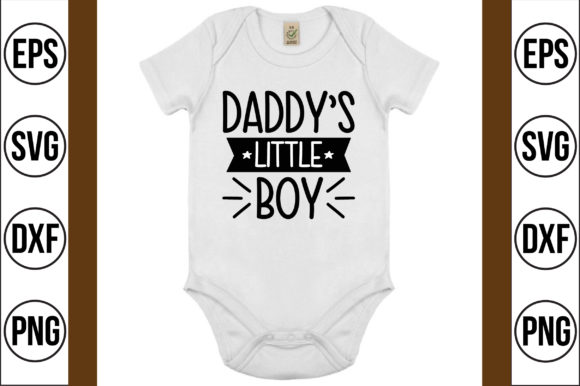
Daddy’s Little Boy
First Impression: Warm, Simple, and Instantly Recognizable
When I opened the Daddy’s Little Boy design for the first time, I wasn’t looking for flash — I was looking for feeling. And it delivered: soft curves, balanced lettering, and a gentle, heart-centered layout that reads as sincere, not saccharine. It’s not overly detailed or ornate, which is exactly why it works so well as a machine embroidery design. The shape fits neatly within a 4”–5” hoop — ideal for baby onesies, toddler sweatshirts, or the front pocket of a canvas tote bag. As a designer who regularly sources graphics for boutique apparel lines, I appreciate how this design avoids visual clutter while still carrying emotional weight. It doesn’t shout — it smiles.
A Real-World Test: Embroidering a Keepsake Baby Towel
Last week, I used Daddy’s Little Boy on a set of organic cotton baby towels for a local boutique’s Father’s Day collection. I chose a medium-weight tear-away stabilizer and tested stitch density on scrap fabric first — crucial, since the script-style lettering has subtle tapering in the strokes. On the final piece, the satin stitch held beautifully on the towel’s looped surface, and the phrase remained legible even after two rounds of gentle machine washing. Customers responded strongly to the warmth of the phrase — one dad emailed saying he’d framed the towel after his son outgrew it. That kind of emotional resonance is rare in T-Shirt Designs — and rarer still in Graphics meant for real-world stitching.
Where Daddy’s Little Boy Shines (and Where It Needs Care)
This design excels on stable, medium-to-heavy fabrics: cotton twill aprons, fleece-lined sweatshirts, denim tote bags, and structured pillow covers. Its clean outline and moderate stroke width translate well into embroidered patches and custom caps — especially when paired with a simple border or subtle heart accent. For Etsy sellers, it’s a strong candidate for printable mockups: the SVG and PNG files render crisply in design previews, helping buyers visualize the finished product before purchase.
That said, caution is needed in a few practical spots:
- Thin or stretchy fabric: Avoid using Daddy’s Little Boy directly on lightweight jersey or ribbed knits without additional cut-away stabilizer — the script’s narrow connections can pucker or distort.
- Dark or textured backgrounds: While the JPEG and PNG files preview well on dark mockups, actual embroidery requires careful thread color selection. A light ecru or soft grey thread often reads warmer and more natural than stark white on charcoal fabric.
- Curved surfaces like caps: The design fits comfortably on front panels, but avoid placing it too close to the crown seam — slight distortion in the “D” and “y” letters can occur if hooping isn’t precise.
- Tiny details: There are no micro-elements (like eyelashes or tiny stars), but the lowercase “o” and “b” have tight internal spacing — always check your embroidery file’s stitch count and density before scaling below 3.5”.
Design Integrity Meets Commercial Practicality
What makes Daddy’s Little Boy valuable beyond sentiment is its versatility across product types. As a craft business owner, I’ve used it for:
- Personalized baby blankets (paired with a small stitched heart motif)
- Embroidered kitchen tea towels (stitched in navy thread on natural linen)
- Custom sweatshirt bundles for Father’s Day pop-ups
- Digital embroidery file listings on Etsy — the included EPS and DXF files make it easy to adapt for laser-cut applique or vinyl overlays
It supports brand consistency without demanding a rigid aesthetic — whether you’re building a minimalist nursery line or a playful family-themed shop, Daddy’s Little Boy adapts without diluting its core message.
Designer Notes You’ll Actually Use
Before stitching your first Daddy’s Little Boy project, here’s what I recommend — based on six years of commercial embroidery work:
- Always test on scrap fabric — especially if switching between cotton, fleece, or terry cloth.
- Review thread color contrast in both daylight and indoor lighting; some light greys vanish on heather grey sweatshirts.
- Confirm hoop size compatibility — while the design fits standard 4×4 hoops, double-check your machine’s max dimensions if using older models.
- Inspect small corners in the vector files (SVG/EPS) — look for stray anchor points or unjoined paths that could cause jump stitches.
- Test black-and-white mockups — this reveals legibility issues faster than color previews.
- Use proper stabilizer — medium-weight cut-away for knits, tear-away for stable wovens, and fusible for lightweight linens.
- Verify licensing terms — since this is a digital embroidery file, confirm whether personal, small-batch commercial, or unlimited use is permitted before listing finished products or reselling the design assets.
Final Thought: It’s Not Just a Phrase — It’s a Finished Product Moment
I don’t choose designs just for how they look on screen. I choose them for how they land in someone’s hands — how they hold up after washing, how they photograph on Instagram, how they make a customer pause and say, “Yes, that’s *exactly* what I wanted to give.” Daddy’s Little Boy earns that pause. It’s confident in its simplicity, reliable in execution, and quietly versatile across handmade product categories. Whether you’re stitching a single personalized gift or producing 50 embroidered tote bags for a local shop launch, this design carries weight without heaviness. It feels like a detail that was thought through — not rushed, not overdesigned, and never forgettable.